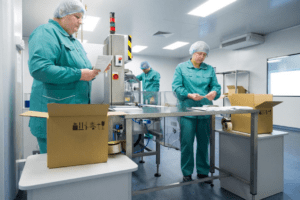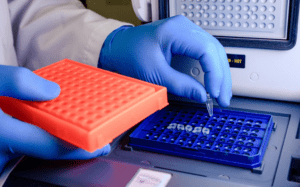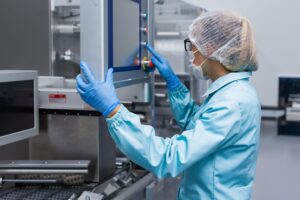
AI in medical manufacturing is changing this sector. By 2026, the union of smart algorithms and real-time evaluations have improved processes. Also, it will redefine standards for safety, efficiency, and personalization.
These technologies are creating a new era of nimble production, where averting failures or sensing imperfections happens in milliseconds. This will guarantee that every product meets precise healthcare requirements.
Implementing Predictive Maintenance on the Factory Floor
AI in medical manufacturing for maintenance marks a turning point in medical manufacturing. Instead of waiting for machines to be unsuccessful, sensors now keep track of their conduct in real time (monitoring vibrations, temperature, energy use, and overall performance).
With this data, AI can detect the initial signs of wear or malfunction before they become grave problems. The result is a more clever, consistent production procedure that saves costs, evades downtime, and certifies consistent quality.
The benefits are strong and immediate, as you will see next:
- Elimination of unplanned downtime. An unforeseen failure on a line producing stents or heart valves can have serious effects. Forecasting failures permits scheduling interventions during episodes that do not affect production.
- Improved inventory and resources. Production groups previously know which part requires replacement, stopping emergency stockpiles and warranting the assignment of the job to the appropriate technician.
- Extended equipment durability. Workers can operate under better conditions and perform detailed maintenance to reduce stress on machinery, thus extending its useful life.
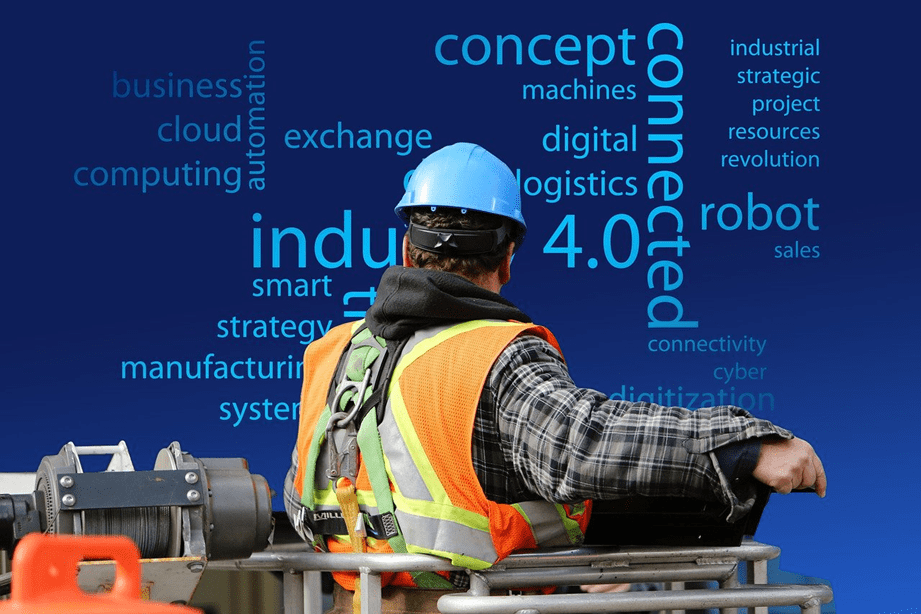
- Better regulatory compliance. Complete digital records provide the justification of all actions, streamlining audits and guaranteeing adherence to every established standard. This approach, an important pillar of Industry 4.0, warrants that the manufacturing of medical devices is an efficient and unfailing process.
Enhancing AI Quality Control through Visual Inspection
Quality control with AI in medical manufacturing has changed visual inspection in the medical industry. While a human inspector can notice visible defects, AI detects microfractures, surface irregularities, or minute dimensional deviations that could compromise device safety.
Speed is also an important factor in this procedure. AI-based inspection systems process thousands of images per minute. This permits a continuous flow on the production line without losing quality.
By 2026, this technology will no longer be a luxury but a crucial standard for any manufacturer hoping to compete in modern industry. Visual inspection with artificial intelligence (AI) will become a standard in the medical industry.
Superior accuracy
The superior accuracy obtainable with AI-powered visual inspection systems depends on high-resolution cameras and innovative computer vision algorithms. This mixture makes it possible to recognize defects invisible to the human eye.
AI can easily detect microfractures, microscopic irregularities in welds, or minute dimensional deviations. Therefore, this capability warrants that medical devices, electronic components, and industrial parts meet the highest safety and trustworthiness standards
In this case, it diminishes the risk of failure and consolidates customer confidence in the brand.
Speed and efficiency
These systems can process thousands of images per minute, something impossible to do with human supervision. This way, production lines can keep a high pace without compromising quality.
Furthermore, automation decreases human fatigue and error, warranting uniformity in every inspected batch. The result is augmented productivity, shorter lead times, and the capacity to scale operations without a relative increase in labor.
Competitive standard
About the competitive standard, by 2026, AI-powered visual inspection will be almost a precondition for fulfilling international regulations. Some of the most important are those of the FDA for medical devices and the ISO 13485 standard for quality management systems.
The digital traceability offered by these systems permits the recording of every detected defect, easing audits and certifications. Companies that use this technology obey regulations and position themselves as innovative leaders in their sectors. Therefore, differentiating themselves from lagging competitors.
Additional benefits of AI in medical manufacturing
The other benefits of AI in medical manufacturing are also noteworthy. Early fault discovery decreases waste by avoiding defective parts from advancing through the production line.
This helps in cost optimization, as rework and the necessity for manual inspection decrease. In the medical field, patient safety is better by ensuring more reliable products.
Furthermore, digital records deliver transparency in audits, consolidating credibility with customers and regulatory norms. Besides the gains, inspection systems with the use of AI also allow for ongoing improvement and innovation in medical manufacturing.
Since AI permits processing huge volumes of data, organizations can spot repeating anomalies, enhance their production parameters, and avoid risks when the risk has not yet fully materialized. This predictive maintenance ability improves long-term reliability as well as more intelligent manufacturing practices.
Immediate future
Lastly, the direct future of this technology points toward advanced integration. Generative AI will allow systems to notice defects and also to propose design solutions or alterations in real time.
Digital twins, meanwhile, will generate virtual models of production lines capable of simulating situations. Thus, it will forecast failures before they happen, improving preventive maintenance.
Although already key in the medical industry, this technology is rapidly expanding into various sectors. They include aerospace, automotive, and pharmaceuticals, in which precision and safety are critical.
Therefore, AI in visual inspection improves the quality and safety of medical devices. Also, it boosts efficiency, competitiveness, and opens up new opportunities in multiple industries.
The Future of the Smart Factory in AI in Medical Manufacturing
The smart factory, established as a model by 2026, represents the highest level of technological integration in the industry. Accurate and latest data guide every decision within the production line, converting the plant into an active and flexible ecosystem.
AI in the manufacturing process gathers information from sensors, cameras, and management platforms. Also, compare it with real-time prognostic analytics. When this technology notices even minimal differences in raw material composition, it automatically regulates production parameters.
Similarly, if the market changes in demand, the system reorganizes the plant’s schedule. A collaborative environment, where production, logistics, and quality control share the same database, increases this flexibility.
At last, the factory of 2026 will be an adaptive, resilient, and value-driven atmosphere. This is the promise of AI in medical manufacturing: create an ecosystem where operative excellence and incessant novelty serve people’s health and well-being. To ensure quality, partner with RexMed Health and optimize your manufacturing processes today. Contact us!